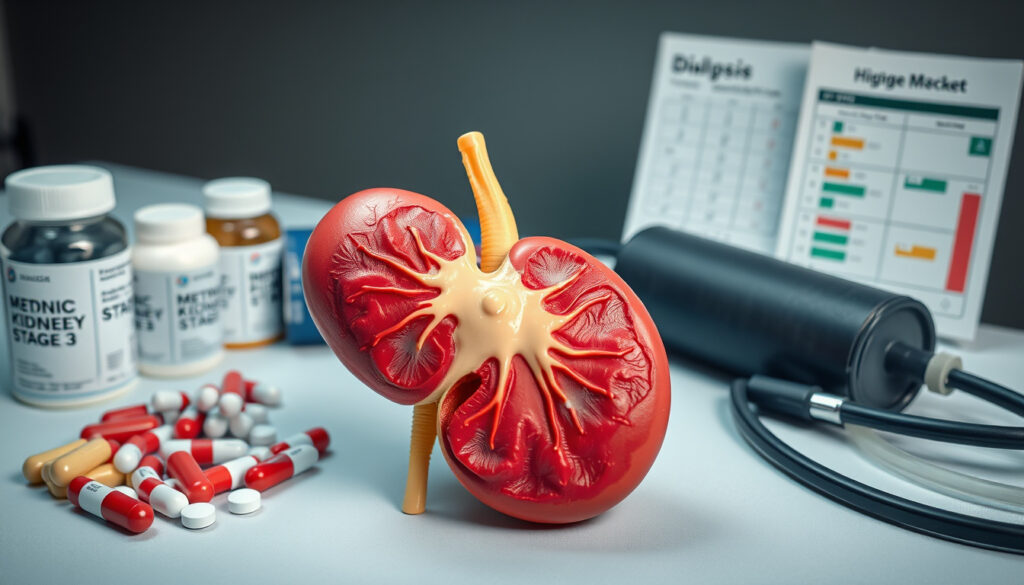
Chronic Kidney Disease Stage 3: Symptoms, Treatment, Life Expectancy
Finding out your kidneys aren’t filtering quite the way they should can feel unsettling — but stage 3 chronic kidney disease often progresses slowly, and many people manage it well with the right support. Understanding what’s happening inside your body at this stage, what the numbers actually mean, and which daily choices make a real difference is the first step toward taking control.
GFR Range: 30-59 mL/min · Damage Level: Mild to Moderate · Substages: 3a (45-59) and 3b (30-44) · Common Symptoms: Tiredness, Swollen Ankles
Quick snapshot
- Exact life expectancy varies widely — no two people have identical trajectories
- How fast someone progresses depends heavily on individual factors
- Progression from stage 3 to stage 4 is sporadic, not inevitable, with proper management (WebMD)
- Lifestyle adjustments, regular monitoring, and working with your doctor on medication choices can slow progression
| Label | Value |
|---|---|
| Definition | Mild to moderate kidney damage |
| GFR Level | 30-59 mL/min |
| Prevalence Sites | Covered by Kidney Fund, NHS |
| Stage 3a eGFR | 45-59 mL/min/1.73m² |
| Stage 3b eGFR | 30-44 mL/min/1.73m² |
| Mortality 3-year rate | 6% |
| Mortality 10-year rate | 51% |
| Sodium limit | <2,300 mg/day |
What is the life expectancy of someone with stage 3 kidney disease?
Life expectancy with stage 3 CKD varies considerably based on age, comorbidities, and how well the condition is managed. A survey of 13 studies on stage 3 kidney disease found that the all-cause mortality rate ranged from 6% at 3 years to 51% at 10 years, according to WebMD. This wide range reflects just how much individual circumstances influence outcomes.
Factors Affecting Life Expectancy
The two substages carry meaningfully different risks. Research published in PubMed shows that mortality runs 4.8 per 100 person-years in stage 3B, compared to just 1.1 per 100 person-years in stage 3A (PMC). Beyond the substage, factors like blood pressure control, diabetes status, heart health, and how consistently someone follows dietary and medication recommendations all weigh heavily on long-term outcomes.
Stage 3a vs Stage 3b Prognosis
Stage 3a means you have mild to moderate loss of kidney function, while stage 3b indicates moderate to severe loss, according to the National Kidney Foundation. The difference isn’t trivial — kidneys at 30-44% function in stage 3b face a steeper climb toward complications like anemia and bone disease. The catch is that many people in stage 3b still have years before they approach kidney failure, provided they stay engaged with their care plan.
Management to Extend Life
With consistent management, many people live years or even decades without progressing to kidney failure, according to NephJC. The KDIGO 2026 Anemia Guideline, published in January 2026, recommends annual hemoglobin assessment in CKD G3 to catch issues early. Controlling blood pressure remains foundational — the American Kidney Fund notes that slowing progression with BP medications can help even without an underlying hypertension diagnosis.
Should I be worried about stage 3 kidney disease?
Whether stage 3 CKD is worrying depends on perspective: it’s serious enough to require attention, but manageable enough that panic isn’t warranted. The kidneys have mild to moderate damage at this stage, per the American Kidney Fund. Beginning to struggle with filtration is the reality, but targeted action now can make a measurable difference.
Severity of Stage 3 CKD
Complications to watch for include high blood pressure, anemia, and bone disease, according to WebMD. The National Kidney Foundation specifies that stage 3a involves mild-moderate loss (eGFR 45-59), while stage 3b involves moderate-severe loss (eGFR 30-44). Both substages warrant monitoring, but the risk profile rises noticeably in stage 3b.
When It Becomes Serious
Progression to stage 4 is sporadic, not inevitable, with appropriate care, according to WebMD. The key watchpoints are rising protein in urine (uACR) and declining eGFR over time — both signal whether the kidneys need more aggressive support. Ignoring regular check-ups and letting blood pressure or blood sugar run unchecked is what transforms a manageable stage into a more urgent one.
Signs to Monitor
Possible symptoms at stage 3 include fatigue, weakness, swelling in legs and feet, changes in urination, back or flank pain, high blood pressure, and mild anemia. Stage 3b specifically may also bring nausea, according to the National Kidney Foundation. Dry or itchy skin and lower back pain are also commonly reported, per the American Kidney Fund. However, many people with stage 3 CKD experience no symptoms at all, which is why lab work is essential.
Bottom line: The implication: Stage 3 CKD isn’t a crisis, but it is a green light to take action. The choices made — or avoided — in the next few years largely determine what the next decade looks like.
What foods should you avoid with stage 3 kidney disease?
Diet is one of the most direct ways to influence kidney health at stage 3. Limiting certain ingredients reduces the workload on kidneys and helps manage complications like high blood pressure and bone thinning. The National Kidney Foundation recommends limiting sodium to less than 2,300 mg daily for stage 3a CKD management.
Top 5 Foods to Limit
Processed foods rank high on the list of items to cut back on, according to sources cited on American Kidney Fund. These products typically load on sodium for preservation and flavor. Beyond that, the main categories to moderate include:
- Sodium-heavy foods: Deli meats, canned soups, restaurant meals, and snack chips — all contribute to fluid retention and elevated blood pressure
- Processed meats: Hot dogs, bacon, and sausage often contain phosphorus additives that are harder for damaged kidneys to filter
- Dark sodas: Colas and other dark beverages can contain high phosphorus levels and contribute to bone mineral imbalance
- Beans and lentils (in large portions): These are high in potassium, which can build up when kidney function is reduced
- Bananas and oranges: Both are high in potassium; portion control matters more than complete avoidance for most people
Kidney-Friendly Diet Tips
Reading labels becomes essential. The National Kidney Foundation emphasizes a balanced diet with fresh ingredients whenever possible. Protein intake of approximately 0.8 g/kg/day is recommended for G3-G5 non-dialysis CKD, according to Diabetes Care. This means moderate portions of meat, fish, or plant proteins rather than high-protein diets or extreme restrictions.
Phosphorus and Potassium Concerns
Damaged kidneys struggle to filter excess phosphorus, which can leach calcium from bones over time. The American Kidney Fund notes that calcium and vitamin D supplementation are often part of bone health management. Potassium balance is equally tricky — too much can affect heart rhythm, while too little has its own risks. Working with a renal dietitian rather than guessing helps hit the right targets.
Patients with stage 3 CKD benefit most from swapping processed convenience foods for home-cooked meals with fresh ingredients. The difference doesn’t require gourmet cooking — simple substitutions like fresh herbs for salt shaker, baked chicken for deli meat, and water for soda address the biggest dietary levers.
How long does it take to go from stage 3 to stage 4 kidney disease?
There’s no standard timeline for advancing from stage 3 to stage 4 — it depends on how aggressively kidney function is declining and how well underlying causes like diabetes and high blood pressure are controlled. The WebMD confirms that progression to stage 4 is sporadic, not inevitable.
Progression Factors
The uACR (urine albumin-to-creatinine ratio) stages directly increase progression risk, according to the American Kidney Fund. Higher protein in the urine means kidneys are under more stress. Additional factors include age, smoking status, cardiovascular disease, and whether the original cause of kidney damage (such as diabetes) remains well-controlled.
Slowing Progression Strategies
Medications proven to slow progression in stage 3a include ACE inhibitors or ARBs, SGLT2 inhibitors, non-steroidal mineralocorticoid receptor antagonists (nsMRAs), and statins when appropriate, according to the National Kidney Foundation. The KDIGO 2026 guidelines emphasize continuing the highest tolerated RASi (renin-angiotensin system inhibitor) dose and managing hyperkalemia before reducing, per IHS. Even if eGFR drops below 30, continuing ACE/ARB therapy is recommended rather than stopping abruptly.
Monitoring Timeline
KDIGO 2026 recommends annual hemoglobin assessment in CKD G3, published by NephJC. This means regular lab work — typically every 6-12 months for stable stage 3 patients, more often if results are changing. eGFR trends over 12-24 months matter more than a single reading. Patients should ask their nephrologist how fast their kidney function has been declining and what target to aim for.
Many patients in stage 3 never reach stage 4. Those who do often take years or decades to get there — provided they stay consistent with monitoring, medications, and lifestyle adjustments. The gap between stage 3 and stage 4 isn’t a cliff; it’s a slope, and the gradient depends heavily on management choices.
What are symptoms and causes of chronic kidney disease stage 3?
Stage 3 CKD sits in the middle ground — kidneys have lost a meaningful portion of function, but most people still feel relatively well. Symptoms, when they appear, are often mild enough to attribute to busy schedules or aging. The causes are varied but share a common thread: anything that strains the kidney’s filtering units over time.
Common Symptoms
Fatigue and weakness often lead the symptom list, followed by swelling in the hands and feet from fluid retention, according to the NHS. Changes in urination — more frequent nighttime trips, foamy urine, or unusual amounts — can signal that the kidneys aren’t filtering properly. High blood pressure frequently shows up before kidney disease is even diagnosed, since the kidneys help regulate it. Mild anemia is common at this stage because the kidneys produce less erythropoietin, the hormone that tells bone marrow to make red blood cells.
Key Causes
Diabetes and high blood pressure account for the majority of CKD cases worldwide, per sources across American Kidney Fund. Other contributors include glomerulonephritis (inflammation of kidney filters), polycystic kidney disease, recurrent kidney infections, prolonged use of NSAIDs that damage kidney tissue, and certain autoimmune conditions. Sometimes the cause isn’t clear — that’s called “CKD of unknown etiology,” and it requires extra attention to rule out reversible factors. If you’re looking for more information on managing stage 3 chronic kidney disease, you can find a comprehensive guide at What is a Power of Attorney.
Diagnosis and ICD-10
Stage 3 CKD is diagnosed primarily through eGFR (estimated glomerular filtration rate) calculated from a blood test. A result between 30-59 mL/min/1.73m² confirms stage 3, with subdivision into 3a (45-59) or 3b (30-44) based on the number, according to the National Kidney Foundation. Urine tests measuring protein and albumin help determine how aggressively the kidneys are leaking these substances. The ICD-10 code N18.3 covers chronic kidney disease stage 3, with N18.31 for stage 3a and N18.32 for stage 3b.
“Stage 3a CKD means you have mild to moderate loss of kidney function.” — National Kidney Foundation
What experts say
A survey of 13 studies on stage 3 kidney disease found that the all-cause mortality rate varied from 6% in 3 years to 51% in ten years.
— WebMD (Health Publisher)
The all-cause mortality rate was higher in stage-3B CKD (4.8 per 100 person-years) than stage-3A CKD (1.1 per 100 person-years).
— PMC (Systematic Review)
KDIGO 2026 recommends annual hemoglobin assessment in CKD G3.
— NephJC (Nephrology Journal Club)
With management, many live years or decades without progressing to kidney failure.
— NephJC (Nephrology Journal Club)
For patients diagnosed with stage 3 CKD, the path forward is clear: stay engaged with monitoring, prioritize dietary adjustments, and work closely with a healthcare team on medications that protect remaining kidney function. The condition is manageable, not inevitably progressive — and the window for making a difference is now.
Related reading: Stage 4 Cancer Survival Rate · Symptoms of Throat Cancer
pbhurkenephrologyurologyandgynecologyinfertilityclinicmumbai.com, kdigo.org, pubmed.ncbi.nlm.nih.gov, centurymedicaldental.com
Patients facing chronic kidney disease stage 3 often prioritize understanding stage 3 kidney disease life expectancy, which varies by GFR levels and management strategies.
Frequently asked questions
What causes chronic kidney disease stage 3?
Stage 3 CKD most commonly results from long-standing diabetes or high blood pressure that has gradually damaged kidney filters. Other causes include glomerulonephritis, polycystic kidney disease, recurrent infections, and prolonged NSAID use. Some cases have no clear cause identified.
What is chronic kidney disease stage 3 treatment?
Treatment focuses on managing complications (blood pressure, anemia, bone health) and slowing progression. Medications include ACE inhibitors or ARBs, SGLT2 inhibitors, statins when appropriate, and sometimes iron or anemia therapies. Lifestyle changes — low sodium diet, regular exercise, avoiding NSAIDs — are foundational.
What is chronic kidney disease stage 3b?
Stage 3b is the more advanced substage, with eGFR between 30-44 mL/min/1.73m² compared to 45-59 for stage 3a. Mortality rates are significantly higher (4.8 vs 1.1 per 100 person-years), and symptoms like fatigue and nausea tend to be more pronounced.
What should I avoid with CKD stage 3?
Avoid NSAIDs (which damage kidneys), excessive sodium (which raises blood pressure and causes fluid retention), and processed foods with hidden phosphorus additives. Limit potassium-rich foods if labs show elevated potassium, and moderation on protein intake — around 0.8 g/kg body weight daily for non-dialysis CKD.
Can stage 3 kidney disease be reversed?
Kidney damage at stage 3 cannot typically be reversed, according to WebMD. However, with aggressive management of underlying causes, some patients see eGFR stabilize or decline very slowly over years. Early intervention offers the best chance of preserving remaining function.
What is chronic kidney disease stage 3 ICD-10 code?
The ICD-10 code N18.3 covers chronic kidney disease stage 3. Subclassifications include N18.31 for stage 3a (eGFR 45-59) and N18.32 for stage 3b (eGFR 30-44). Healthcare providers use these codes for diagnosis, billing, and treatment planning.
More related posts
 Katie Piper Before Acid – Modeling Life and Attack Story
 Salvation Army Charity Shop: What to Give & What’s Rejected
 Admiral Car Insurance Quote: Online, Phone & Compare
 Wednesday’s Child Is Full of Woe – Meaning, Origin, Full Rhyme
 Best Vitamins for Women: Top 3 Essential Nutrients & Daily Guide
 Classic Football Shirts Manchester – Guide to Iconic Retro Kits
 Kim Jong Un’s Daughter: Latest Verified Facts & What We Know
 What is a Prime Number? Definition, Examples & List (1-100)